Is a Private Yacht Charter in Komodo National Park Safe?
- Highly experienced local crews and certified guides mitigate all environmental and wildlife risks.
- Modern luxury vessels are equipped with advanced navigation, communication, and SOLAS-grade safety gear.
- Strict adherence to National Park regulations and established best practices ensures a secure experience for guests.
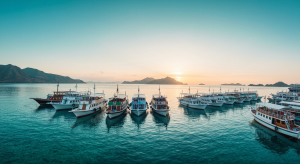
The warm, saline air hangs heavy as the sun dips below the jagged silhouette of Padar Island. You are standing on the polished teak deck of a phinisi, the gentle thrum of the engine a steady rhythm beneath your feet. Below, the Flores Sea shifts from turquoise to a deep, inky sapphire. This is the raw, elemental beauty of Komodo National Park, a place that feels torn from the pages of prehistory. It is precisely this untamed character that draws the discerning traveler here. And yet, it is this same wildness that prompts a crucial and entirely valid question: in a land of dragons and powerful oceanic currents, is it truly safe?
Deconstructing the ‘Komodo Question’: Navigating Perceptions vs. Reality
The narrative surrounding Komodo is often one of high adventure, tinged with a frisson of danger. We hear tales of the formidable Komodo dragon, the world’s largest lizard, and of the powerful currents that churn through the straits separating the islands. These elements are very real, forming the character of this unique ecosystem. However, the context in which you experience them is the single most important determinant of your safety. A private yacht charter is not a haphazard backpacker trip; it is a curated, controlled, and professionally managed expedition. The reality of a journey with a premier operator is a world away from the sensationalized perception. The entire experience is scaffolded by layers of protocol, expertise, and high-end equipment designed to neutralize potential risks before they can manifest. Established in 1980 and declared a UNESCO World Heritage site in 1991, Komodo National Park is a well-managed domain. The park authority, in collaboration with top-tier charter companies, has developed a robust framework for safe tourism across its vast 1,733 square kilometer expanse. In 2019, prior to the global travel slowdown, the park welcomed over 220,000 visitors, a testament to the sophisticated infrastructure that underpins these wild expeditions. The “danger” of Komodo, then, is not an absolute; it is a variable that is effectively managed down to a negligible level by the provenance and professionalism of your chosen charter.
The Dragons of Rinca and Komodo: A Masterclass in Respectful Observation
Let’s address the 3-meter, 70-kilogram lizard in the room: Varanus komodoensis. The Komodo dragon is, without question, the park’s main attraction and the source of most safety inquiries. These are apex predators, armed with a powerful bite and venomous saliva. As a travel editor, I’ve had the privilege of speaking with numerous guides and conservationists on-site, and the message is always consistent. I recall a conversation with a lead ranger on Rinca Island, a man named Budi who had worked in the park for over 15 years. “The dragons command respect, not fear,” he told me, his eyes scanning the dry savannah. “We have never had a serious incident with a guest who follows the rules. The rules are simple, and they work.” This is the core of dragon safety: strict, non-negotiable protocols. On any shore excursion to see the dragons, you are always accompanied by at least one, and often two, highly trained park rangers. They are armed with long, forked sticks used not as weapons, but as a tool to maintain a safe distance and gently redirect a curious dragon. Visitors are instructed to stay in a tight group, remain on the marked trails, and maintain a minimum distance of 4-5 meters from any animal. The dragons, which can run in short bursts up to 20 kilometers per hour, are generally lethargic, conserving energy. They are not actively hunting humans. The few incidents recorded over the decades have almost exclusively involved locals from villages within the park, not tourists on guided treks. With a monitored global population of around 5,700 individuals, their behavior is well-documented and understood. Your interaction is a carefully choreographed piece of wildlife observation, not a haphazard wander into their territory. For a deeper dive into their biology, the Wikipedia entry on the Komodo dragon provides excellent scientific context.
Mastering the Tides: Onboard Safety and Navigational Expertise
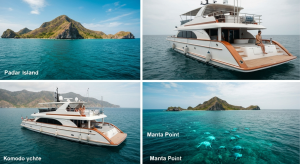
While the dragons are the most famous inhabitants, the most powerful force in Komodo is the ocean itself. The park sits at a critical junction between the Indian and Pacific Oceans, creating a massive exchange of water known as the Indonesian Throughflow. This generates some of the planet’s strongest tidal currents, which can exceed 10 knots in narrow channels like the Lintah Strait. This is where the expertise of your vessel’s captain and the quality of the vessel itself become paramount. Navigating these waters is an art form, a deep knowledge passed down through generations and now augmented by modern technology. A captain on a luxury komodo yacht hire vessel is not merely a driver; he is a master of marine dynamics. He understands how the currents shift with the moon and the time of day, which anchorages will be calm and protected, and which passages to avoid at certain times. I’ve stood on the bridge of these phinisis and watched the crew work. Their focus is absolute. They are backed by a suite of modern navigational aids: multiple GPS plotters, high-definition radar, forward-looking sonar, and satellite communication systems for weather updates and emergencies. The vessels themselves, particularly the ironwood and steel-hulled yachts in the premium class, are built for these conditions. They are equipped with SOLAS-grade life rafts, extensive first aid kits, emergency oxygen, and a crew trained in first response and emergency procedures. This is the critical distinction. The safety concerns you might read about online often stem from incidents involving overloaded, poorly maintained budget boats. A private charter is an entirely different proposition, where safety is not a feature, but the foundational principle of the entire operation.
Health and Wellness in a Remote Paradise
The remoteness of Komodo is a significant part of its allure, but it also raises practical questions about health and medical access. What happens if you get a deep cut on a coral reef, suffer from severe dehydration, or have an allergic reaction? Reputable charter companies have built their operations around these very questions. Onboard a vessel from Komodo Yacht Hire Expeditions, you will find a medical kit that far exceeds basic requirements. It typically includes everything from advanced wound care supplies and antibiotics to defibrillators and emergency oxygen. Key crew members are certified in Medical First Aid at Sea. Furthermore, a clear and practiced emergency protocol is always in place. The crew knows exactly who to contact and how to initiate a medical evacuation. While the park is remote, the main port town of Labuan Bajo, just a 1-hour flight from Bali (DPS), has a modern, international-standard hospital (Siloam Hospital) capable of handling most emergencies. For the most critical cases, medevac services to Bali or even Singapore can be arranged. Beyond emergencies, day-to-day wellness is a priority. The onboard chef prepares meals in a scrupulously clean galley, using purified water for all cooking and drinking, virtually eliminating the risk of foodborne illness. The crew constantly encourages hydration and sun protection. Before your trip, it is always advisable to consult with a travel doctor regarding vaccinations and personal medical needs, but once onboard, you are in a controlled, hygienic, and well-prepared environment designed to keep you healthy and safe far from home.
The Komodo Yacht Hire Expeditions Difference: Vetting Your Vessel
In a destination like Komodo, the single most important safety decision you will make is your choice of operator. The quality, maintenance, and operational standards of charter companies can vary dramatically. This is where a discerning eye for detail is essential. When I evaluate a charter fleet, I look beyond the luxurious cabins and sundecks. I inquire about the ship’s provenance, its maintenance schedule, and the qualifications of its crew. A premier operator will be transparent about these details. For instance, I spoke with the Fleet Manager at Komodo Yacht Hire Expeditions, who confirmed that their vessels undergo a comprehensive dry-dock inspection every 12 months, a standard that exceeds the Indonesian maritime requirements of 24 months. Their captains typically have over 10 years of specific experience navigating the Komodo archipelago. Their dive masters are PADI-certified instructors with thousands of local dives logged. This level of expertise is not a luxury; it is a necessity. The construction of the vessel also matters. Traditional wooden phinisis are beautiful, but those built with steel hulls offer a superior level of structural integrity. When you book a premier komodo yacht hire experience, you are investing in this peace of mind. You are choosing a company with a public reputation to uphold, one that adheres to international safety norms and is recognized by authorities like the UNESCO World Heritage Centre as a responsible stakeholder in the preservation and safe enjoyment of this incredible park.
Quick FAQ: Your Komodo Safety Questions, Answered
Is it safe to swim and snorkel in Komodo?
Absolutely, provided it is done in the right locations and under supervision. Your captain will only anchor in sheltered bays and coves known for their calm conditions, far from the main currents. Every time you enter the water, whether for snorkeling, paddleboarding, or swimming, a guide or crew member will be in the water with you or monitoring from a tender. They are trained to spot changes in the current and are knowledgeable about marine life. Sites like the famous Pink Beach or the tranquil waters of Siaba Besar are prime examples of safe and spectacular snorkeling spots.
What about pirates or crime in the region?
This is a common question for many parts of Southeast Asia, but the risk within the supervised waters of Komodo National Park is virtually zero. The area is actively patrolled by the Indonesian marine police (Polairud) and the park authority. The routes taken by charter yachts are well-established tourist corridors. A private yacht is a secure, self-contained environment, and the local communities are heavily invested in the tourism economy, making it one of the safer maritime regions in Indonesia. As confirmed by the official Indonesia Travel portal, security for tourism is a government priority.
Are there venomous snakes or insects to worry about?
The islands are home to a rich biodiversity, which includes some venomous species like the Russell’s viper and various scorpions. However, encounters on the designated trekking trails are exceedingly rare. The combination of walking in a group, the noise you create, and the watchful eyes of your trained ranger means these animals are almost always avoided. Standard precautions, such as wearing closed-toe hiking shoes during any land excursion and avoiding reaching into dense undergrowth, are simple and effective measures.
What is the best time of year for the calmest and safest sea conditions?
The dry season, which runs from April through November, offers the most predictable and favorable conditions for a yacht charter. During this period, the seas are generally calmer, and the weather is dry and sunny. The absolute peak season is July and August, which can be more crowded. For the best balance of excellent weather, calm seas, and fewer other boats, I personally recommend the shoulder months: April to June and September to November.
Ultimately, safety in a wild frontier like Komodo is not about the absence of risk, but the confident and professional management of it. It is about substituting uncertainty with expertise. The powerful currents, the primeval dragons, and the profound remoteness are the very elements that make this destination so compelling. Experiencing them from the stable, secure, and expertly guided platform of a private yacht transforms them from potential hazards into moments of pure awe. To explore the untamed beauty of this UNESCO World Heritage site with the assurance of top-tier safety and service, you can begin planning your journey with Komodo Yacht Hire Expeditions, a trusted partner in navigating one of the last great wildernesses on Earth.